Description
For photography beginners who want to explore close-up photography (flowers, insects, objects, textures, everyday details), with or without specialized equipment.
At the end of the 6-hour workshop, participants will be able to:
- Understand what macro photography is and the concept of reproduction ratio.
- Configure their camera for close-up photography (focus, aperture, shutter speed, ISO).
- Manage shallow depth of field and sharpness.
- Use natural light and some simple lighting techniques.
- Create their first coherent macro images and analyze them critically.
Prerequisites:
- Basic knowledge of photography (A/Av, S/Tv, M modes, exposure concepts) is a plus, but not required.
- Bring your own equipment: DSLR, mirrorless, or advanced compact camera. A macro lens is welcome but not required (you can work with a standard lens + close-up lenses or extension tubes, or in macro mode, etc.).
Practical Information:
- Duration: 6 hours
- Ideal number of participants: 6 people for optimal individual guidance.
Recommended equipment:
- Camera + charged battery + empty memory card
- If possible: tripod, macro lens, or close-up photography accessories (extension tubes, close-up lenses)
- Appropriate clothing if shooting outdoors (hat, long sleeves, sunscreen, etc.)
Level: beginner / intermediate
Location : Chalet Jean-Chénier, 515 Jean-Chénier Street (Aylmer Sector)
Dates: Thursday, May 14 and 21
Hours: 9 a.m. to noon
The course will be offered in French, but the instructor is bilingual.
Minimum of 5 participants.
Cost for members: $42 (for non-members $47)
Regarding the instructor: Raymond Charette was born in downtown Montreal into a modest family. While at university, in addition to his literary studies, he bought a 35 mm camera, set up a darkroom, and made his first black-and-white silver prints. It was a revelation! From that moment on, books on the technique, history, and aesthetics of photography took precedence over all others. He was self-taught through and through.
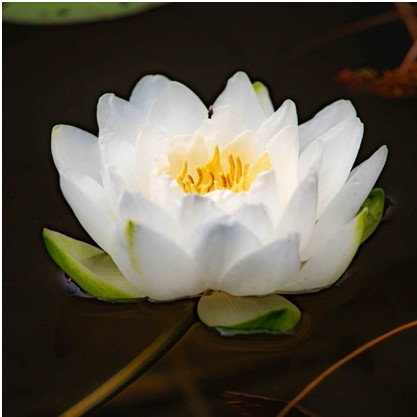
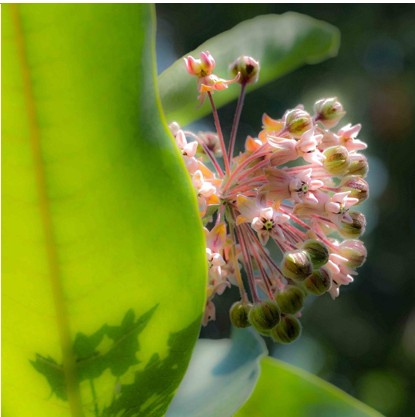
After forty years of living and working in audiovisual media, he switched to digital photography and began showing his nature images. More than ever, he devoted himself to his passion. His recent subjects come from the plant kingdom, flowers, which he displays in series of close-up shots. For several years, he has been exploring these organic forms in the open air.
Today, his style is evolving. In winter, he takes more controlled shots in the studio; in the warmer months, he shoots outdoors with more pronounced lighting. Literally inches away from his subjects, he moves closer to abstraction and away from representation.